“What if there’s no such thing as time?”
The tree outside my window glistens softly, drying itself from last night’s rain. It is almost 8 AM when my Kindle hits the tabletop with a hard slap. The sound drags me back to reality. And when it does, I am left thinking only one thing: what if, really, there is no time? We’re just a cluster of atoms, floating endlessly in space, with the ability to form memory. That memory: the single, fraying thread that ties us back to our past, woven into our souls.
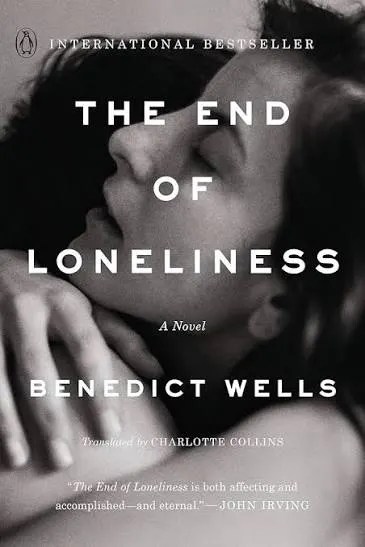
You know a book is good when it makes you question everything you know about life. That is what The End of Loneliness by Benedict Wells does. The premise is tragically simple. We follow Jules, who was orphaned at 10 years old, along with his older siblings, Marty and Liz. Jules goes through the decades like a phantom: boarding school, a sterile job, marriage, fatherhood. And yet, throughout, there is an inescapable void in his soul that his siblings share: the loss of their parents.
To survive, Jules retreats into maladaptive daydreaming. He constructs an imaginative life where his parents are alive, where he didn’t get a job he hated, where he actually has friends, and where he isn’t completely lost to himself. In reality, he spends years leading the ‘wrong life’.
But what if the imagined is just as true as the real?
Because in a billion years, when everything’s gone and forgotten, when time has erased everything and there’s no proof anymore of anything whatsoever, what reality was will be irrelevant.
– The End of Loneliness, Benedict Wells
Wouldn’t that be nice? You can have whatever life you please, in your head, whilst living the one you must live. Nietzsche once said that “if you gaze long into an abyss the abyss also looks into you”. You fight your “monsters”, you obsess over the darkness, until it becomes an inherent part of what you are. You could do that, or you could just escape, like the characters in this book do.
“The reason I was always reading was simply to escape.”
But the novel offers no easy rescue. Wells forces a direct dialogue with our coping mechanisms. Just being in your head will not change your reality; your real life will still be trapped in motion picture.
This friction between imagination and reality is the engine of the book’s character development. It functions exactly like Plato’s cave.
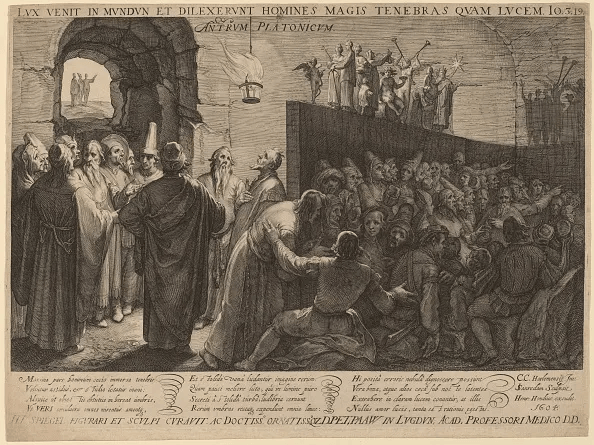
A fire burns behind a group of prisoners. They believe that the shadows on the cave wall are the only reality, and the only way they escape is by turning around, letting the fire hurt their eyes momentarily, before they walk out into the free sun that beams over real trees and animals. For Jules, turning around might mean returning to the writing he abandoned as a child.
We are uniquely broken by our specific tragedies, but Wells turns this grief into a wider metaphor for the human condition. The book admits it plainly: “we humans have been left completely to our own devices down here”. We chase the wrong goals and lose ourselves. All of that to learn who we really are; to love and go through the abyss together.
The siblings fight, abandon one another, and lead challenging lives, but the gravity of their shared wound always pulls them back home. “The only way we can overcome the loneliness within us is together”.
Whilst reading, I kept hearing the muted melody of Sufjan Stevens’ Should’ve Known Better:
I should have known better
Nothing can be changed
The past is still the past
The bridge to nowhere
I should have wrote a letter
Explaining what I feel, that empty feeling
Wells’ prose feels exactly like that song. It is revealed only in disjoined fragments, allowing memory to work as an effortless plot device. He uses a quiet mixture of sensory imagery, metaphors and foreshadowing to tie the narrative into one massive, devastating “full-circle” swell. The reader is pulled into that circle with the characters, altered.
There are books you read once, and then numerous times again to notice new things as you age. This is one of them.


Leave a Reply