
Humanity has long attempted to explain natural and mystical phenomenons via various belief systems, be it science or mythology. Mushrooms, in particular, occupy an uneasy position within literature and folklore. Across Romantic poetry, modern literature and philosophy, mushrooms emerge as the bridge between humanity’s relationship with reality and illusion. This grey area prompted me to write Labyrinth, a poem that explores how belief systems can entrap as much as they sustain.
Fungi and Nature
I. Mushrooms & Romantic Wonder
To understand the sundry symbols associated with fungi, and more specifically mushrooms, it is first important to decipher how humans have interpreted these natural elements throughout history. Mike Jay notes how, in 1799, intoxication caused by liberty caps (the “magic mushrooms”) led a family to believe they had been poisoned and driven to insanity, especially as the youngest had been “attacked with fits of immoderate laughter.” This notion shifted in the 19th century, when liberty caps became objects of wonder and curiosity, largely due to their unusual appearance.
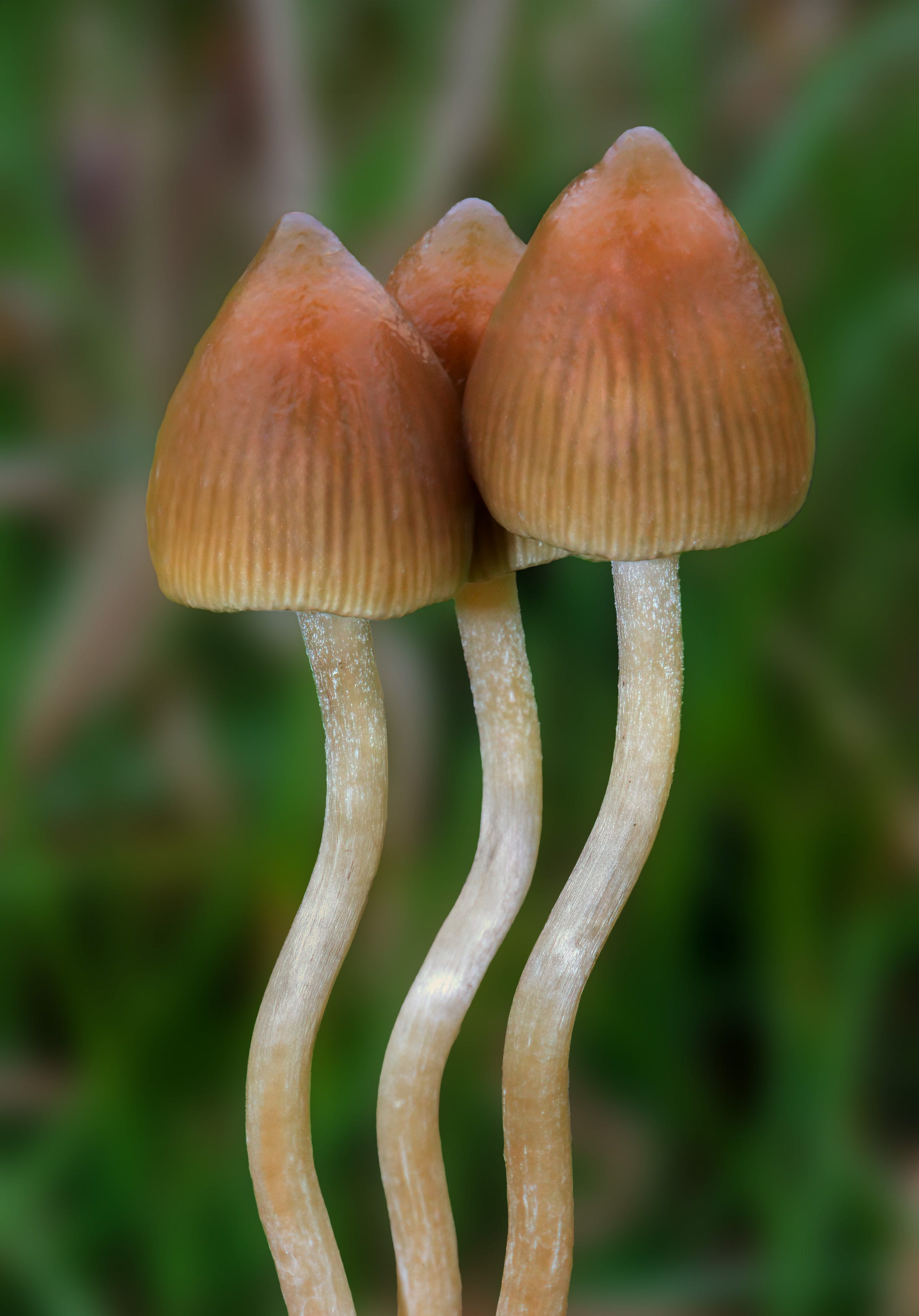
Jay argues that “the Victorian fairy tradition…was imbued with a Romantic sensibility in which rustic traditions were no longer coarse and backward but…an escape from industrial modernity into an ancient, often pagan land of enchantment.” Perhaps the recurring motif positions mushrooms as one of the special paradoxes that had not yet been fully answered by science; “philosophy” had not yet clipped “an Angel’s wings” (Lamia, John Keats). Jay notes that Amanita muscaria “became the distinctive motif of fairyland.”
In reference to the Amanita muscaria, Jay recalls the story of Kopek, in 1797, who had contracted a fever and “was told by a local of a ‘miraculous’ mushroom that would cure him.” Jay continues to propose the subsequent effects that the agaric had on Kopek, noting how he was drawn “through ‘the most attractive gardens where only pleasure and beauty seemed to rule’; beautiful women dressed in white fed him fruits, berries, and flowers. He woke after a long and healing sleep and took a second, stronger dose, which precipitated him back into slumber and into the sense of an epic voyage into another world.”
This incident recalls Keats’ poem, La Belle Dame Sans Merci, a haunting ballad about a knight allured and abandoned by a beautiful, supernatural fairy woman with “honey wild and manna-dew”, leaving him “alone and palely loitering” on the “cold hill’s side”.
Through Romantic and Victorian interpretations, mushrooms emerge not merely as natural objects, but as liminal thresholds between reason and enchantment.
II. Mushrooms, Fantasy & Transformation in Literature
The affiliation between Romanticism and the ‘magical’ elements associated with mushrooms perhaps connotes the symbolism of the mushroom as a supernatural object, upon which “fairies, sprites, and similar assemble.”
This concept is reverberated in Alice in Wonderland. Jay notes that “Alice takes a chunk from each side of the mushroom and begins a series of vertiginous transformations of size, shooting up into the clouds before learning to maintain her normal size by eating alternate bites.” He further analyses how the bewilderment of mushrooms in Victorian literature differs from present society, whereby “the liberty cap is an emblem of a new political struggle: the right to ‘cognitive liberty’, the free and legal alteration of one’s own consciousness.”
As a result, the imagery of nature and fungi is contextualised as a broader concern about false consciousness, which inspired the crux of Labyrinth, where decaying mortals circle blissfully unaware of their decomposition. Thus, mushrooms function as agents of transformation, revealing how altered perception can both liberate and entrap the human mind.
III. Mushrooms as Rot, Decay, and the Uncontrollable
This leads to my next point — the symbolism of mushrooms as rot and decay. Taken together, this culminates in a broader critique seen in the works of many Romantic poets, including Keats, Tennyson, and Emily Dickinson. Shannon Lewis discusses the science behind “fairy rings,” which occur “when a mushroom takes a liking to a specific location” and considers it “home.”
Lewis further observes archaic Celtic folk tales, where “any human that steps into a fairy ring is forced to dance with the creatures of that ring until they die of exhaustion or otherwise go mad.” The imagery functions to emphasise the trap of modern society: unaware of our mortal purposes, we ‘dance’ in the circle of society, slowly led toward insanity and metaphorical decay, whereby one loses sight of the present. Lewis raises another point central to the depiction of the natural world, noting that “fairy rings represent a side of nature we do not and cannot control. The fungus symbolizes a hidden world best left undisturbed”.
Here, decay becomes both literal and metaphorical, positioning mushrooms as reminders of nature’s autonomy and humanity’s fragile illusion of control.
IV. Nature, the Sublime & Epistemic Limits
As such, this suggests that there are certain elements of nature that cannot and should not be subjected to human intervention. Echoing Romantic critiques, this concept recalls Wordsworth’s The Prelude.
But after I had seen
That spectacle, for many days, my brain
Worked with a dim and undetermined sense
Of unknown modes of being; o’er my thoughts
There hung a darkness
In William Wordsworth’s epic poem The Prelude, the lake (specifically Ullswater in the Lake District) is central to a famous episode where a young Wordsworth steals a boat, feels powerful, but is then terrified by a huge mountain that seems to pursue him. The episode therefore exposes a crucial childhood lesson about humanity’s triviality and nature’s overwhelming, sublime power, evoking Burke’s concept of the sublime: beautiful, yet terrifying.
In this sense, nature will always remain superior to humanity. To this day, science cannot answer many mysteries that nature has to offer. Such allegories reflects an underlying anxiety about the Platonic Cave, whereby humans remain entrapped in an illusion they deem to be reality. Perhaps these representations reveal the epistemic limits of humanity, and how we should not attempt to exceed them. This tension can be seen most clearly in Shakespeare’s King Lear, where Lear is driven to madness as he attempts to decipher which “force of nature” is working against him.
Romantic encounters with nature thus expose the danger of epistemic arrogance, revealing how the pursuit of mastery can culminate in terror and madness.
V. Mushrooms, Death, and Moral Ambiguity
Lewis notes further that “mushrooms are traditionally connected with magic, whether that be witches, sorcerers, or the Devil.” This idea perhaps stems from their scientific role, whereby mushrooms “feast on dead matter.” Consequently, there can be two contrasting perspectives that the concept positions the reader to acknowledge. For the ‘dead matter,’ the presence of mushrooms serves as a harbinger of decay; for the mushroom itself, it is merely fulfilling its natural function.
A spiritual interpretation of mushrooms, and fungi more generally, can render them positive and almost magical: “God is real and mushrooms are our gateway to them.” This portrayal of moral ambiguity can be seen in William Blake’s poem The Tyger. On the one hand, the tiger is “fearful” and “deadly,” but on the other, it is a creation of God just as much as the lamb. It is only fulfilling its assigned purpose; it is human interpretation that renders one evil and the other pure.
When the stars threw down their spears
And water’d heaven with their tears:
Did he smile his work to see?
Did he who made the Lamb make thee?
Tyger Tyger burning bright,
In the forests of the night:
What immortal hand or eye,
Dare frame thy fearful symmetry?
Mushrooms, like Blake’s tiger, resist moral simplification, existing beyond human binaries of good and evil.
VI. Impermanence & Humanity’s Afterthought
The impermanence of humanity is further explained by Nicholas Money. “Because humans evolved in ecosystems dependent upon mushrooms there would be no us without mushrooms. And no matter how superior we feel, humans remain dependent upon the continual activity of these fungi. The relationship isn’t reciprocal: without us there would definitely be mushrooms. Judged against the rest of life (and, so often, we do place ourselves against the rest of nature) humans can be considered as a recent and damaging afterthought.”
Fungi thus destabilise anthropocentric worldviews, reminding humanity of its conditional and transient existence.
VII. Mushrooms, Otherness & Reclamation
As mentioned before, mushrooms are also associated with cults and witchcraft. Lewis notes that “the connection between fungus, witches, and women comes down to their association with mystery; they evoke an unknowableness.” In this sense, mushrooms can be seen as the “other,” in the same way that women are often categorised. Lewis refers to Sylvia Plath’s poem Mushrooms to feature this idea.
Overnight, very
Whitely, discreetly,
Very quietly
Our toes, our noses
Take hold on the loam,
Acquire the air.
The mushrooms, metaphorically representing marginalised sections of society, quietly take control back from the powerful. This idea is echoed in Orwell’s Animal Farm, where nature ultimately reclaims the Earth from humanity.
It is fascinating to acknowledge the many meanings mushrooms assume across history and literature. Ultimately, it all comes down to one thing: belief.
Belief systems and the mundane
VIII. Belief as Structure
How we interpret nature can be a direct consequence of our beliefs. Todd Shy argues that “belief today is an eccentricity…that doesn’t drive the larger narrative of who we are, either as individuals or as a society.”
Belief has inspired much of the canonical literature studied today — including Dickinson, Nietzsche, Dostoevsky, and Kafka — all of whom grappled with what constitutes and sustains humanity.
Belief, whether sacred or secular, shapes not only interpretation but existence itself.
IX. Small Gods, Capitalism & False Meaning
Belief manifests in many forms, such as Small Gods — deities with little or no belief from followers. Terry Pratchett explores this in A Temple of Small Gods, a place for “forgotten deities” and their relationship with religious institutions.
The narrative arguably echoes Blake’s critique of society’s confusion between organised religion and spirituality. As such, ‘gods’ need not be divine beings but entire systems of belief. Could active participation in capitalism be understood as belief, too? Is modern society avoiding truth out of fear of the mundane? Once again, we return to the theme of mortality, represented by the mushrooms.
X. Stasis, Decay & Modern Entrapment
Though written in different contexts, the symbolism of decay is evident in Wilfred Owen’s Exposure:
Our brains ache, in the merciless iced east winds that knive us . . .
Wearied we keep awake because the night is silent . . .
Low drooping flares confuse our memory of the salient . . .
Worried by silence, sentries whisper, curious, nervous,
But nothing happens.
Rather than simply reflecting the brutal realities of war, this could also serve as a critique of modern societal and economic entrapment, where mortals remain “awake” and “curious,” yet stagnant. At what point does curiosity end? At what point is knowledge complete? At what point do we accept the mundane?
Endless anticipation, rather than fulfilment, becomes the defining decay of modern consciousness.
XI. Nature, Knowledge & Escape from Illusion
The ceaseless battle between nature and man is exemplified in Yann Martel’s Life of Pi. Arguably, Martel conveys nature not as a force to be defeated, but one to be comprehended and honoured. However, coexistence requires acknowledging epistemic limits.
This entrapment is reflected in the Hindu imagery of the Chakravyuh — a complex, spiralling battle formation designed to trap enemies, famously entered but not exited by Abhimanyu. Metaphorically, the Chakravyuh represents Maya, or illusion. Once trapped, escape requires knowledge beyond conventional means. Connecting with nature offers a path toward such higher understanding. Instead, society continues to function in an Orwellian manner: through Newspeak and doublethink, rendering subversive thought impossible.
Only by recognising illusion, and our place within it, can humanity hope to escape the labyrinth it has constructed.
Conclusion
Ultimately, the recurring literary representation of mushrooms serves as a critique against the limits of mortal understanding. Mushrooms represent the liminal space between consciousness and entrapment, seen through their mystical allegories. In reflecting the confinements of human understanding, these texts expose humanity’s impulse to construct belief systems that offer routine and comfort rather than truth. As such, mushrooms echo the paradox of Plato’s cave; whereby people choose to believe in the illusionary shadows, rather than their realistic sources.
References
Todd Shy, Literature and Belief: https://comment.org/literature-and-belief/
Money, What mushrooms have taught me about the meaning of life: https://blog.oup.com/2012/02/mushroom-meaning-life/
Shannon Lewis, The Symbolism of Mushrooms: https://slowburnhorror.com/2021/07/16/the-symbolism-of-mushrooms/
Mike Jay, Fungi, Folklore, and Fairyland: https://publicdomainreview.org/essay/fungi-folklore-and-fairyland/
 The Barbaric Yawp
Leave a comment